01 / Review archive

Visuals and Sound

Cuphead’s hand-drawn cartoon styling and lively audio direction do more than summon an earlier screen age: they give every encounter a theatrical rhythm, making a demanding arcade challenge feel like a show in motion.

Review scope

Cuphead Arcade is an informational review website for Cuphead. This page considers animation, scenery, music, effects, and readability; for encounter tactics, visit Gameplay and Bosses.

Original archival-style illustration of a cup-headed cartoon performer on a small vaudeville stage with spotlights and music curls.
Original editorial illustration for this audiovisual review.

02 / At a glance

A Hand-Printed Identity

Rubber-Hose Motion

Elastic poses, exaggerated expressions, and constantly active figures make the world feel awake before a fight even begins. Broad silhouettes and deliberate timing give characters a theatrical presence, so personality often arrives through posture and motion before the player has learned what an encounter demands.

Scenic plate / archive note

Painted Stagecraft

Hand-painted backgrounds do more than fill space. They establish mood, scale, and comic danger like scenery behind a proscenium, making each setting feel arranged for an audience. Their layers turn locations into theatrical sets rather than passive wallpaper around the action.

Record side / lively

Jazz-Era Energy

Lively music and expressive sound effects give repeated attempts a recognisable arcade pulse. The score supplies mood and momentum, while reactive sounds help actions land as events. Together they make demanding play feel less like a dry drill and more like another pass through a performance.

03 / The animation review

Movement Makes the Cast

Movement carries personality

In this review, the most immediate strength of the 1930s-inspired visual direction is how readily motion suggests intention. A boss or enemy does not read only as an obstacle placed in the route; exaggerated posture, facial expression, anticipation, and comic timing make it feel like a performer entering a scene. That animation-first characterisation gives an encounter an identity before its patterns become familiar, and it helps the game’s theatrical premise remain visible during fast play.

The screen rarely feels still

That energy also means the frame can carry looping gestures, secondary movement, and decorative activity at once. It is a major part of the appeal: a scene looks busy because it seems alive, not because it has been left unfinished. Yet the same density can make an early attempt feel crowded. Players are often taking in personality, scenery, and danger together, which is why visual charm and practical reading deserve to be discussed side by side.

Spectacle keeps a pulse through repeat attempts: the animation makes failure feel like a return to a lively stage, not simply a reset.


04 / Painted theatre

Backgrounds as Theatre Sets

A painted world with a stage-like frame

Hand-painted backgrounds give each area the feeling of a distinct theatrical setting. Broad scenic shapes establish place and mood, while the foreground keeps the player’s attention near the action. The result is a cinematic frame that suggests depth and comic scale without losing the handmade character of the presentation. Rather than simply decorating the route, scenery helps each run-and-gun space feel prepared for a particular kind of performance.

Look between attempts

Detail that rewards a pause

When the action stops, background detail invites a slower visual tour. Layers of scenery can reward a pause between attempts, giving the challenge a sense of place beyond the immediate route. During active play, however, attention still belongs to the hazards and platforming demands.

Original painted cartoon theatre landscape with curtains, rolling clouds, crooked towers, and an inked performer at the right edge.
Original editorial scenery imagining a painted theatrical backdrop.

05 / Under the spotlight

Soundtrack Under the Spotlight

Music gives attempts momentum

A lively, jazz-era-inflected score helps repeated attempts retain a sense of forward motion. In demanding arcade-like play, returning to a challenge can otherwise feel mechanically flat; here, the musical atmosphere keeps the attempt framed as another performance. The music does not replace concentration, but it gives the cycle of trying, learning, and trying again an emotional continuity that suits the game’s theatrical visual identity.

Mood changes with the stage

The period character has room to shift. Different moments can feel playful, tense, grand, or mischievous while still belonging to the same broad jazz-era theatrical world. That tonal range matters because it keeps the audiovisual identity from becoming a single repeated joke. The presentation can change its emotional temperature without abandoning the hand-printed, animated atmosphere that holds the review’s subject together.

06 / Action feedback

Effects That Explain the Action

The audiovisual appeal matters most when it helps a player understand a busy moment. In run-and-gun action, effects are not only decoration; they can become punctuation for timing, change, and consequence.

Hits need a clear punctuation mark

Crisp audiovisual feedback is valuable wherever shots, impacts, and successful actions need to register quickly. The review value is not in naming every effect, but in recognising the principle: a player benefits when an action has a noticeable result. In a game built around movement and timing, that kind of punctuation can reinforce the rhythm of play and help an attempt feel responsive rather than visually vague.

Boss moments need a signal

Expressive changes in motion, staging, and sound can help a player recognise that a boss encounter has shifted, even when the scene is crowded. Such cues may not make a demanding sequence simple, but they can give a developing pattern a shape. The more clearly a moment announces itself, the easier it is for a player to connect what they saw or heard with what changed on the next attempt.

Clarity comes from repetition

Many players will learn this visual and sonic language across repeated attempts. A scene that first appears chaotic can gradually resolve into familiar patterns, stage signals, and moments worth watching. That learning process remains part of the challenge rather than a promise of ease, so readers wanting broader preparation can continue to Difficulty and New Player Tips for practical newcomer context.

07 / Readability check

When the Screen Gets Busy

The elaborate presentation is central to Cuphead’s character. A balanced review also needs to ask how that constant show-business energy feels when the player is trying to read a demanding sequence for the first time.

The appeal

Dense by design

Dense animation and decorative staging are a large part of the game’s charm. Rubber-hose movement, jazz-era theatricality, and hand-painted backgrounds give encounters a constantly changing sense of occasion. The screen feels active because it is presenting a show, and that visual character is one reason the game leaves such a strong first impression.

The trade-off

Time to separate signals

New players may need time to distinguish hazards, character animation, and scenic decoration when a demanding sequence is moving at full pace. This is not an alarmist criticism; it is a calm reminder that visual richness asks for attention. The player’s reading of the frame can improve as patterns become less unfamiliar.

08 / Final frame

A Poster Worth Pausing For

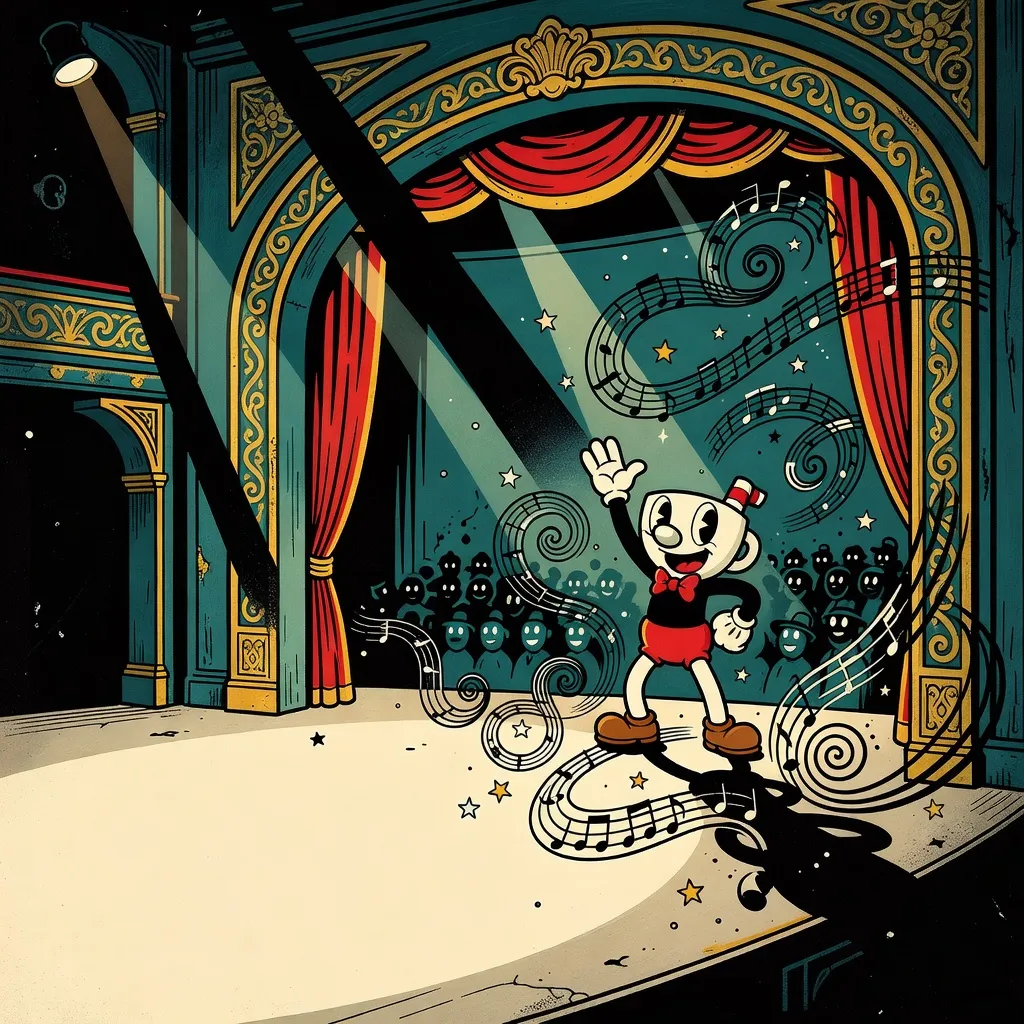
Cuphead’s audiovisual design leaves a coherent impression because animation, scenery, music, and effects all point toward the same theatrical arcade mood. Rubber-hose energy makes the cast feel performed rather than merely placed; painted backgrounds turn spaces into stages; and the jazz-era sound keeps the action moving with personality. That unity does not remove the challenge or the occasional need to parse a crowded frame. Instead, it makes the demanding play feel part of a world built to be watched and heard, not merely cleared.

Original vintage theatre finale illustration of a cup-headed cartoon performer under a grand proscenium with spotlights and music ribbons.
Original archival-style editorial illustration intended to evoke this review’s theatrical theme; it is not official artwork.

09 / Search carefully

Explore the Game Carefully

Find Cuphead on Google Play

This button opens Google Play search results in a new tab. It is not a confirmed official Cuphead listing.

10 / Continue the archive

Continue the Review Archive

Read about gameplay and bosses

The visual show frames run-and-gun action and boss encounters, but the practical patterns deserve their own closer look. Continue to our gameplay review for a focused route into the action behind the staging.

Explore Gameplay and Bosses

Prepare for the learning curve

If the audiovisual intensity sounds exciting but daunting, start with supportive practical context for new players. Our tips page gathers a calmer next step for approaching the challenge.

Read Difficulty and New Player Tips