01 / Arcade Review

Cuphead Review

Cuphead is a striking, demanding action game whose 1930s-inspired visual and audio direction gives every encounter the air of a tiny theatrical event. Its strongest appeal is not effortless momentum, but the satisfying process of watching closely, trying again, and gradually turning a chaotic scene into something you can read.

Who this review serves. Cuphead Arcade is an English-language informational review website for players weighing audiovisual charm against a challenge-forward arcade structure. This review covers visuals and sound, gameplay and bosses, weapons and charms, platforming, difficulty, and practical newcomer context without pretending to be a sales pitch.

Find Cuphead on Google Play

This opens Google Play search results and is not a confirmed official Cuphead listing.

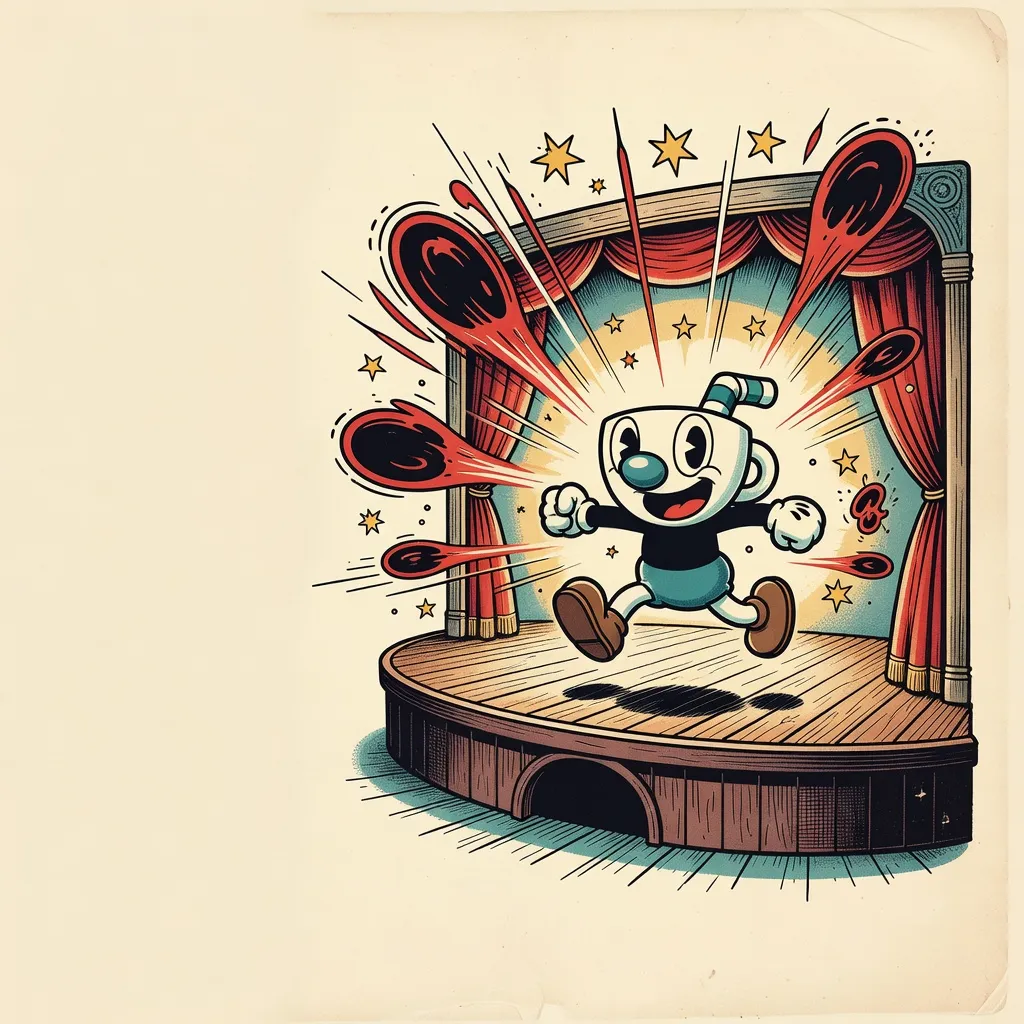
Vintage arcade-poster illustration of a cup-headed cartoon adventurer moving through theatrical action.
Independent review reel / action under the lights
02 / At a glance

The Arcade Contract

Before the poster art and big personalities take over, Cuphead asks for a simple kind of attention: watch what is happening, make a decision quickly, then learn from the result. Its key activities put different pressure on that same habit.

01

Boss encounters at the center

Boss encounters are the clearest lens for Cuphead’s action. Players watch for patterns, react with care, and use each attempt to understand the next opening. These are theatrical confrontations, but their personality matters because it frames a concentrated test of attention rather than serving as decoration alone.

02

Run-and-gun pressure

Run-and-gun play changes the pace into forward-moving action. You are asked to manage immediate threats while keeping momentum and awareness aimed at the route ahead. That faster rhythm preserves the arcade-like energy, asking for quick choices without turning the experience into a passive sequence of set pieces.

03

Platforming as movement test

Platforming challenges add another demand beside shooting: movement, timing, and safe positioning matter. They do not replace the game’s encounter-focused identity, but they make space and route awareness part of the larger conversation, preparing players to think about equipment and practice in practical terms.

03 / The look

Painted for the Big Screen

The period-inspired surface is not merely a wrapper around the action. It gives Cuphead an immediately recognisable theatrical personality and encourages you to read each encounter as a performance with changing beats.

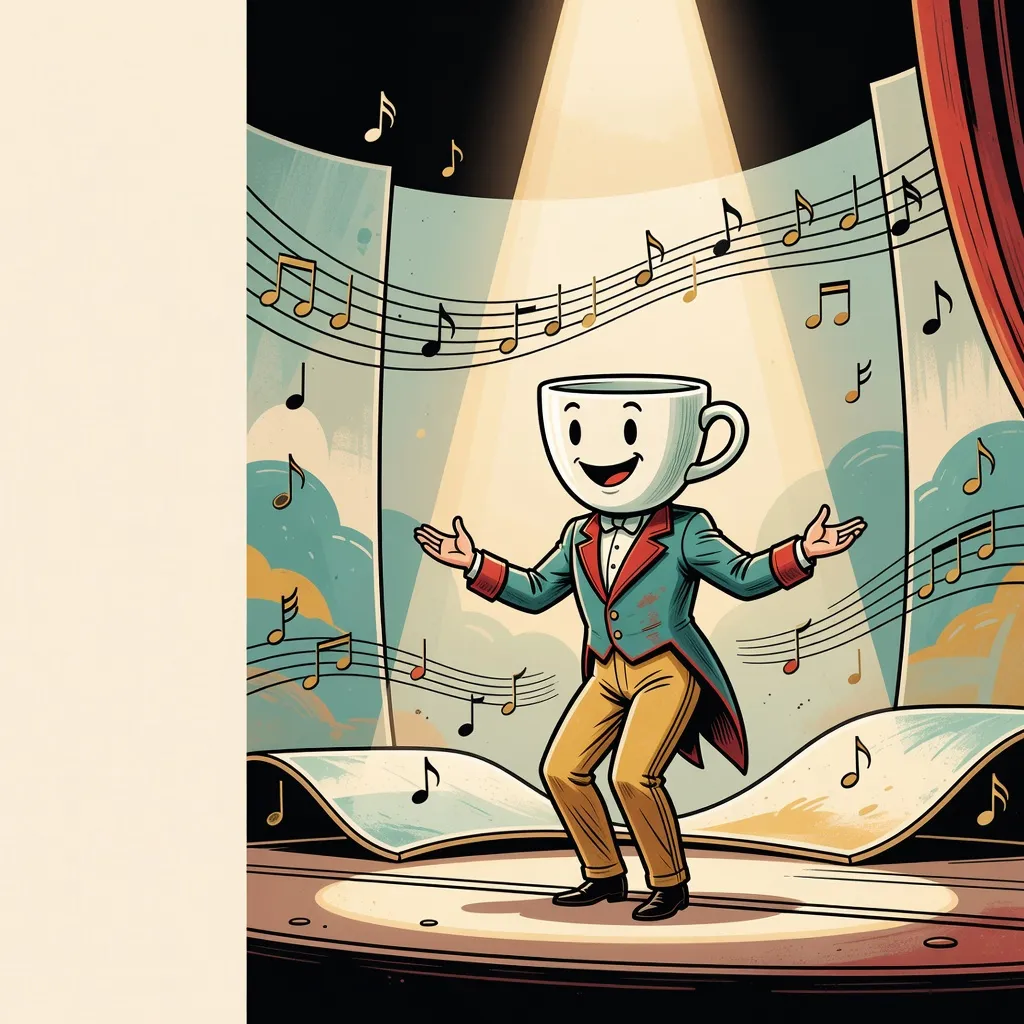
Cup-headed cartoon performer in a stage spotlight with painted scenery and musical lines.
Stage study / visual direction and atmosphere

A visual identity with purpose

Cuphead’s 1930s-inspired visual direction is its defining lens. Hand-inked, vintage-animation-inspired staging gives confrontations an animated, theatrical personality, making the review experience feel distinctive from the first glance. A strong visual identity can also help an encounter read like a performance: shapes, shifts in emphasis, and changing beats become things to notice, rather than a blur of anonymous action.

Sound and atmosphere

Sound as arcade atmosphere

The audio direction supports that period-inspired atmosphere and complements the tension of active play. Its value is qualitative rather than ornamental: sound helps establish pacing and mood while you remain focused on the next decision. It makes the world feel staged and lively, yet the attention required by the action keeps that atmosphere from becoming background dressing.

Explore Cuphead’s visuals and sound in more detail.

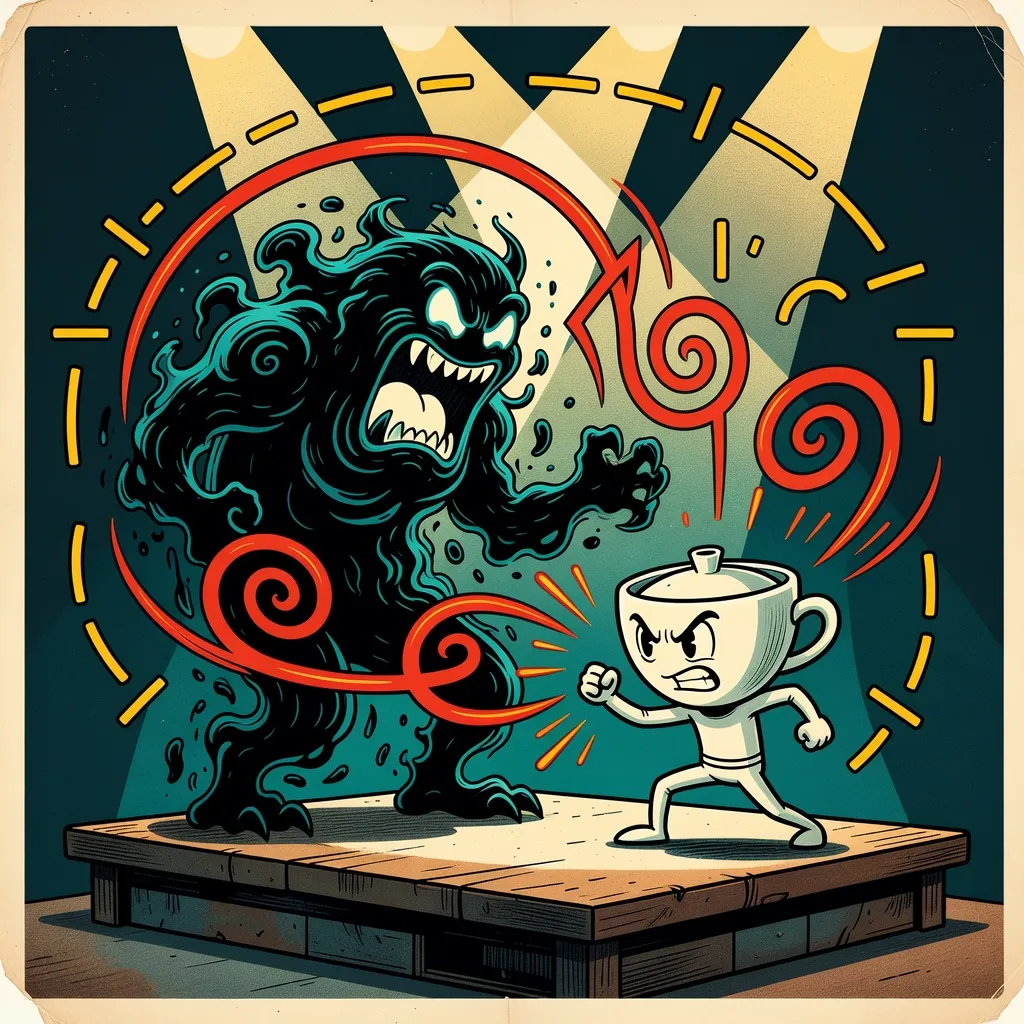
Cup-headed cartoon hero facing a large theatrical monster silhouette under spotlights.
Boss reel / observe, respond, repeat
04 / Boss learning

Learning the Boss Reels

01

Observation before certainty

A boss encounter rewards attention to changing threats, spacing, and repeatable cues rather than instant certainty. A retry can be information gathering: it reveals what needs attention next. That loop will not suit every player, but it gives practice a clear purpose beyond simply repeating the same scene.

02

Pressure stays theatrical

These encounters can feel like staged spectacles while still asking you to act quickly. The 1930s-inspired visual personality becomes part of the tension because expressive movement and bold staging sit alongside real pressure. Visitors unfamiliar with action-game jargon can think of it as keeping up with a show while participating in it.

03

Progress through recognition

Satisfaction can arrive when an intimidating sequence starts to feel legible through practice. Recognition turns a noisy moment into a set of decisions you understand. That is a meaningful reward for players who enjoy close learning, but it may be less appealing to visitors seeking low-pressure progress without repeated attempts.

05 / Moving picture

Run, Shoot, Keep Moving

Momentum under pressure

Run-and-gun gameplay shifts attention toward forward movement, immediate hazards, and rapid decisions while retaining the game’s arcade-like energy. Unlike the concentrated study of a major encounter, this mode encourages you to keep the route ahead in view while responding to what is already nearby. The relationship is not disconnected: both forms of play reward awareness, but they ask you to carry that awareness at a different speed.

A useful change of pace

Moving between encounter types broadens the experience by testing awareness and movement in another rhythm. The review value lies in that contrast, not in a claim about a fixed sequence or structure. If the faster forward-moving side is what interests you most, the dedicated guide offers a more focused place to continue reading.

Explore gameplay and boss encounters.
06 / Equipment and movement

Choose Your Angle

Weapons

Weapons as tactical expression

Weapons belong to Cuphead’s practical decision-making. They give players ways to think about an approach instead of treating every encounter identically. The useful perspective is not to expect an automatic answer, but to consider equipment alongside timing, observation, and the particular kind of pressure a moment creates.

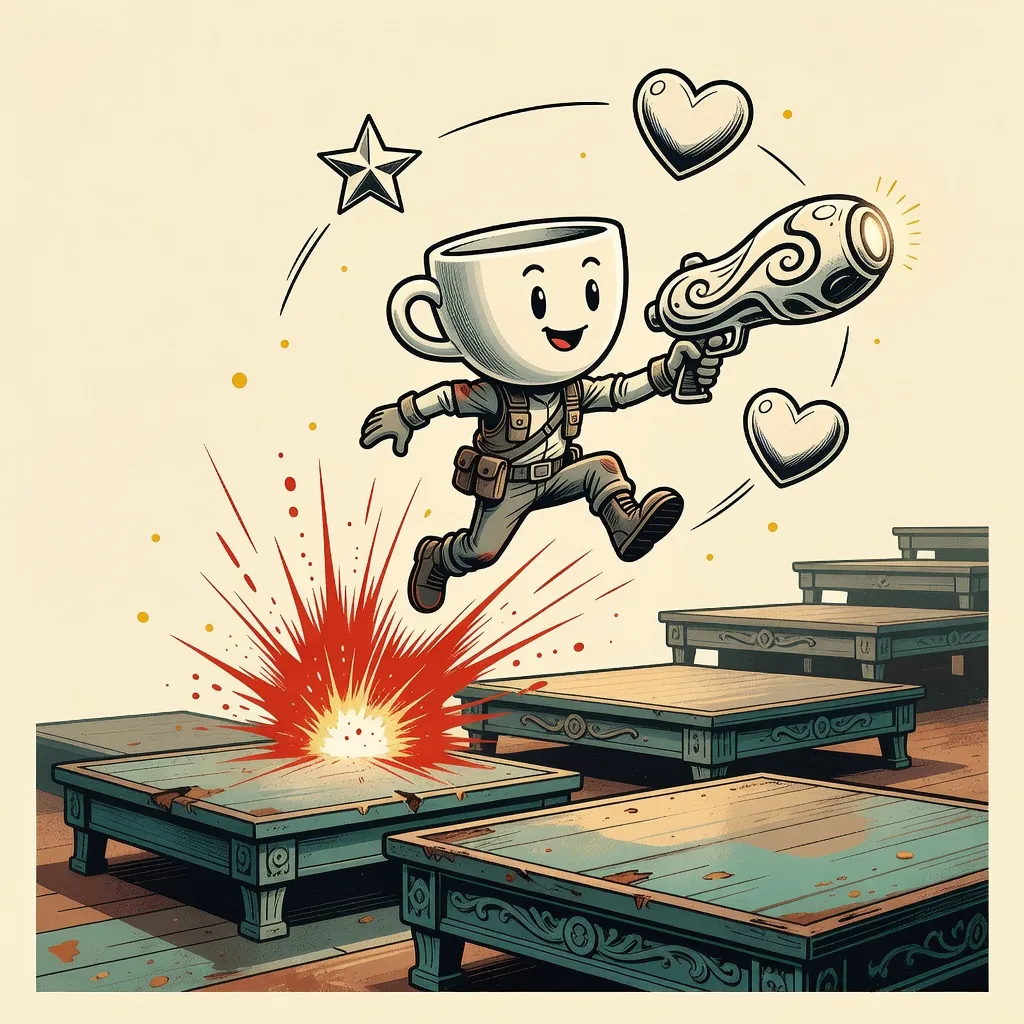
Cup-headed cartoon adventurer leaping between theatre platforms with symbolic props.
Tools and footing / choice under pressure
Charms

Charms as supporting choices

Charms add another layer to consider when thinking about challenge and repeated attempts. Rather than treating them as a route around careful play, it is more useful to see them as part of how a player frames an approach. They support tactical thought without removing the need to notice, move, and respond.

03

Platforming keeps positioning honest

Platforming returns the focus to movement, timing, and safe space. Equipment choices can shape how a player thinks about a run, but they do not replace careful positioning. That connection makes the equipment discussion useful for anyone trying to understand the full challenge rather than looking for a single shortcut.

Explore weapons, charms and platforming.

07 / Suitability check

Difficulty Without the Sales Pitch

Difficulty is central to understanding Cuphead because progress is closely tied to paying attention, practicing, and trying again. That does not make the experience objectively easy or hard for everyone. It does mean that visitors concerned about frustration should treat repetition and close timing demands as part of the proposition, not as an accidental obstacle around the edges.

A fit for pattern-minded players

Visitors who enjoy studying encounters, refining a response, and seeing practice become recognition may find the challenge rewarding. The appeal is likely to be strongest when improvement itself feels meaningful, even before a difficult sequence is fully overcome. That preference is personal, not a promise that every demanding moment will feel satisfying.

A pause point for low-pressure players

Players looking for relaxed, uninterrupted progress may find repeated attempts and close timing demands less inviting. There is nothing lesser about that preference. Cuphead’s focused challenge asks for patience and attention, so visitors who want a calmer pace may reasonably decide that its friction is not the kind they are seeking.

08 / Newcomer notes

Before the Curtain Rises

These field notes are a mindset for a first session, not a list of commands or guarantees. Their aim is to make the game’s challenge easier to read before you decide how deeply you want to pursue it.

01

Watch before forcing progress

Use early attempts to notice rhythms, openings, and moments that need attention instead of treating every try as a pass-or-fail verdict. Observation turns repetition into learning and gives the next attempt a clearer purpose.

02

Keep the next lesson small

Focus on one troublesome movement, timing question, or encounter beat at a time. This does not promise rapid improvement, but it makes repeated attempts easier to interpret and keeps the task from becoming needlessly overwhelming.

03

Treat equipment as a question

Think about weapons and charms as choices to consider alongside the current challenge, rather than automatic solutions. Equipment can inform an approach, while observation and careful movement still remain part of the work.

04

Leave room for the spectacle

The visual and audio direction are part of what makes the experience distinctive, even while concentration is needed during active play. Let the theatrical personality register without losing sight of the decisions happening in front of you.

10 / End of reel

Final Take

Cuphead is best understood as one demanding arcade-style proposition: 1930s-inspired visual and audio direction gives its run-and-gun play and boss encounters unusual personality, while weapons, charms, platforming, and repeated learning keep the action practical and exacting. Its suitability depends less on a universal verdict than on whether you enjoy turning observation into progress through practice and attention. For players drawn to that process, the focused challenge and theatrical presentation belong together; for others, the same demands are useful information before starting.

Find Cuphead on Google Play

This opens Google Play search results and is not a confirmed official Cuphead listing.